How Talent Agencies Split a Brand Deal Between Creator, Manager, and Agency Automatically (May 2026)


Your creator just booked their biggest brand partnership yet, and now you're managing a talent agency commission split across the agent, the day-to-day manager, and the creator themselves. Calculating influencer manager payments and creator agency payouts manually means waiting for funds to clear, then issuing three separate wire transfers over the next week. Payment APIs can handle the entire split automatically, sending every stakeholder their exact cut in real time.
TLDR:
- Managers take 20% and agencies take 10% of brand deals, stacking to remove 30% before creators see funds.
- Brand payments take 90 days to reach agencies, then another week to route through your team.
- Sponsors either add agency fees on top of the creator rate or bundle them into one flat payment.
- API-driven payout systems split commissions instantly across creator, manager, and agency when funds arrive.
- Dots automates multi-party commission splits for talent agencies running brand-deal payouts.
Standard Commission Rates for Talent Agencies and Managers
Before calculating multi-party payouts, you need baseline numbers. Representation fees follow strict benchmarks depending on your specific field and deal type. Getting the talent agency commission split correct requires knowing these standard thresholds:
- Traditional agents take a flat 10% cut on union entertainment jobs, following the same commission structure used across entertainment and creative industries.
- Influencer managers commonly charge 15-20% of a creator's gross income across all revenue streams, though exact rates vary by contract — their cut typically applies to merchandise, sponsorships, and channel revenue alike.
- Digital creator agencies commonly charge somewhere in the 10–20% range on brand partnerships, though no union cap limits how high that rate can go — rates vary by agency, creator profile, and deal size, so confirm the exact percentage in each representation contract.
- When a manager and an agency both represent the same creator, their fees stack against the same gross payment — a 15-20% manager fee combined with a 10-20% agency fee removes 25-40% of any brand deal before the creator receives their cut.
These rates are industry norms, not maximums. Verify the exact percentages written into each representation contract before routing any payments.
How Commission Splits Work in Traditional Entertainment
In film and television, production companies issue payments directly to the talent agency — not to the performer. The agency deducts its commission and deposits the net balance into the performer's account. For union jobs, SAG-AFTRA regulations cap agent commissions at 10%, and the agency must remit the performer's share within a defined timeframe under guild rules.
The Creator Economy Commission Structure: Agencies, Managers, and Multiple Representatives
Digital creators build broader teams than traditional actors, requiring distinct payout structures. A successful creator pairs an influencer manager directing daily strategy with an agency closing brand sponsorships. Each representative draws from the same gross payment, so their fees stack before the creator sees a dollar.
Representative | Primary Role | Commission Scope | Typical Rate |
|---|---|---|---|
Influencer Manager | Daily strategy, content direction, brand relationship management | Cut of all revenue streams: brand deals, merchandise, and channel earnings | 15-20% of gross |
Creator Agency | Sourcing and closing brand partnerships | Cut of brand deals the agency books directly | 10-20% of deal gross |
The manager and agency serve different functions but draw from the same payment. The manager guides the creator's overall business: approving brand fit, setting content strategy, and managing the creator's schedule. The agency focuses on closing deals with specific brands, negotiating rates, and handling contract terms on individual campaigns.
Because both fees apply to the same gross deal amount, a creator with both representatives in place loses 25-40% of any brand payment before keeping the rest. A $50,000 annual brand deal budget nets the creator between $30,000 and $37,500 after both cuts clear — the exact amount depends on the rates written into each representation contract.
Calculating the True Cost: When Commissions Stack
When assembling a representation team, fees compound fast. Multiple representatives draw from the gross total before final creator agency payouts clear.
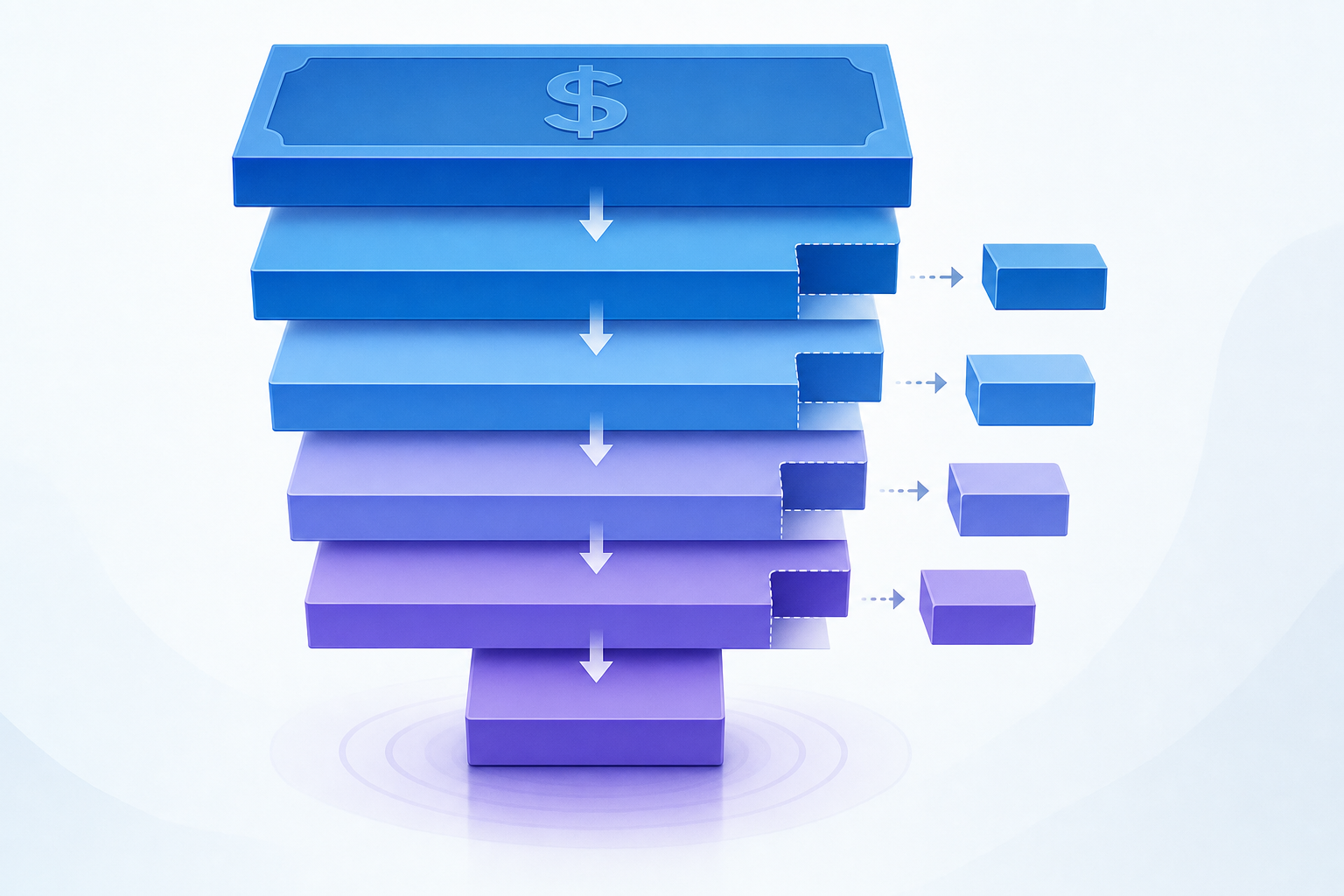
Consider the exact math on a $10,000 brand deal:
- Influencer manager payments take a standard 20 percent cut, removing $2,000 immediately. This structure applies whether you're scaling micro-influencer payouts or managing top-tier talent.
- The booking agency pulls a 10 percent fee based on the original $10,000 gross, taking $1,000 and leaving the creator with $7,000 after both cuts clear.
Payment Timing and the 90-Day Problem
You must plan cash flow around actual payment schedules alongside raw percentages. Because influencer manager payments happen exactly when funds arrive, a delayed corporate wire forces your entire team to wait—making influencer payment timing a critical factor in compensation planning.
Union jobs enforce strict turnaround times. Digital brand deals lack those regulatory protections. The standard timeline creates a delay of four months:
- Sponsors often take 90 days to send capital to your representation after a campaign wraps. Net-60 and net-90 terms are standard in corporate marketing budgets, and no union rule forces brands to move faster.
- Once funds arrive at the agency, internal processing adds another 3-7 business days before the agency cuts a check or wire to the creator and manager.
- The manager then receives their split as a separate transfer, which clears on its own bank timeline, adding another 1–3 days before every stakeholder has confirmed funds.
- When you manage a roster of 20 or more creators, this delay compounds across every deal in the pipeline: a single month of campaign completions can leave dozens of payments in transit simultaneously, each at a different stage of the 90-day clock.
Manual routing makes this worse. Each step requires a human to confirm receipt, calculate the split, and initiate a new transfer — turning a math problem into a scheduling problem across multiple bank accounts.
Who Pays What: Production Companies, Brands, and Agency Fees
Deal structures shape exactly who covers representation costs. Knowing if a quoted budget includes or excludes margins directly impacts final creator agency payouts. Ambiguity here alters exact compensation.
Corporate sponsorships follow one of two payment paths:
- Sponsors remit a distinct margin directly to the representation team, adding this amount onto the base rate—a model similar to affiliate program payouts where commissions are separated from creator earnings.
- Sponsors send a single flat rate, meaning the talent agency commission split routes out of the creator's gross payment—the creator receives the full amount and pays each representative their percentage from it before keeping the remainder.
The add-on model is cleaner for creators because representation costs sit outside the quoted rate, leaving the creator's share intact. With a flat payment, the gross number a brand quotes is not the creator's take-home—it is the starting point before commissions are deducted. This ambiguity often surfaces in deal negotiations when a creator misreads a flat budget as their net payout, only to find 25–30% routed to the representation team before funds settle in their account. Confirming which structure applies before signing a contract removes that confusion entirely.
Automated Commission Splitting: How Payment Systems Handle Multi-Party Payouts
Managing manual wire transfers across a multi-person team causes friction. You wait days for funds to clear before issuing separate checks for representation—exactly the problem that automating many-to-many payouts solves. Programmable payout infrastructure replaces this slow routing. When a brand deposits a campaign budget, an API instantly divides that transaction across stakeholders using hardcoded percentage rules.
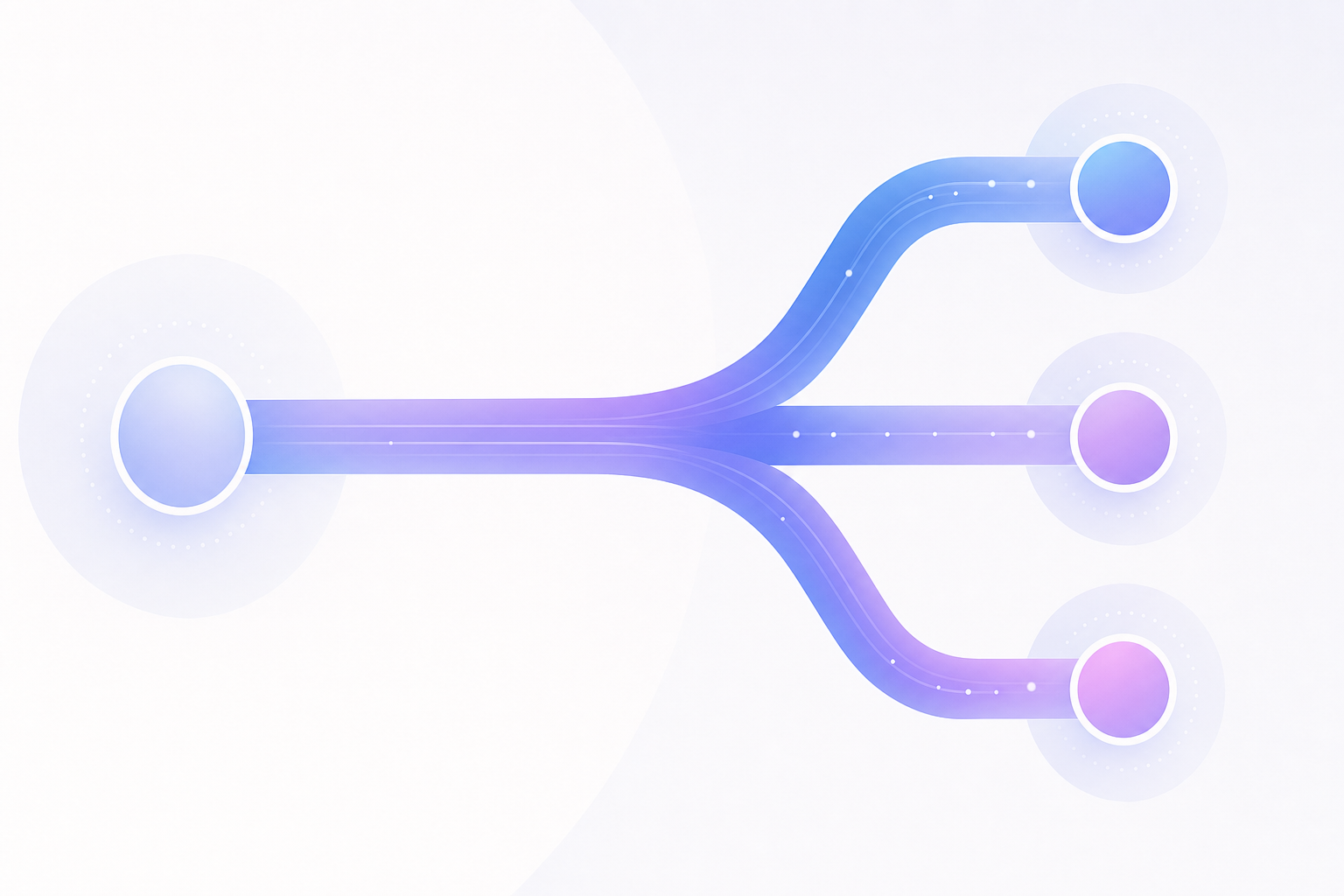
This programmable money flow removes human error and multi-day waiting periods. The automated process follows a strict routing sequence:
- The sponsor sends one single deposit.
- The API reads the contract terms to calculate the exact talent agency commission split, guaranteeing fair compensation for creators and their representatives.
- Creator agency payouts route to the booking team immediately.
- Influencer manager payments clear at the exact moment the creator receives their net earnings, removing manual delays across the entire payment stack.
How Dots Automates Brand Deal Commission Splits for Creator-Facing Businesses
Dots handles multi-party commission splits across creators, managers, and agencies automatically. You connect your brand-deal payment flow once, set percentage rules for each representative type, and the API routes every dollar to the correct recipient the moment funds arrive—no manual transfers, no waiting for checks to clear, no spreadsheet reconciliation across a growing roster.
Final Thoughts on Automating Creator Commission Structures
Stacking commissions across multiple representatives changes your net payout fast, and corporate payment delays compound the problem. Getting exact percentages and timing locked in removes surprises when brand deals finally clear. Talk to us to see how Dots routes talent agency commission splits and influencer manager payments instantly. You set the rules once, then the API handles every transaction automatically.
FAQ
Can talent agents take more than 10% commission on digital creator deals?
Yes. While union entertainment jobs cap agent commissions at 10%, digital creator deals lack those regulatory protections—agencies often charge 15–20% on brand partnerships, and managers take an additional 20% from gross earnings before the creator sees their cut.
What's the fastest way to split a brand deal between creator, manager, and agency automatically?
Programmable payout APIs let you route a single sponsor deposit across multiple recipients instantly using hardcoded percentage rules—the API calculates the exact split, sends creator agency payouts to the booking team, and clears influencer manager payments at the same moment the creator receives their net earnings, eliminating multi-day wire transfers and manual checks.
How do I calculate my actual take-home from a $10,000 brand deal?
Deduct manager and agency commissions from the gross first. A 20% manager cut removes $2,000, then a 10% agency fee takes another $1,000 from the original $10,000, leaving you $7,000—not $7,200—because both representatives draw from the gross total before final payouts clear.
Automated commission splitting vs manual wire transfers for creator payouts?
Automated APIs eliminate the 4–6 day manual process of waiting for sponsor funds to clear, issuing separate checks to each representative, and tracking multiple bank transfers—programmable routing divides the transaction across all stakeholders the moment the deposit arrives, using contract terms to calculate the talent agency commission split without human error.
When should a creator agency switch from manual payouts to an automated commission split system?
If you're managing more than a handful of creators with multi-representative teams, or if delayed sponsor payments (often 90 days post-campaign) force your entire roster to wait while you manually route funds across managers and agencies—automated routing removes that bottleneck and scales without adding finance headcount.